
How to protect your idea?
28.08.2022
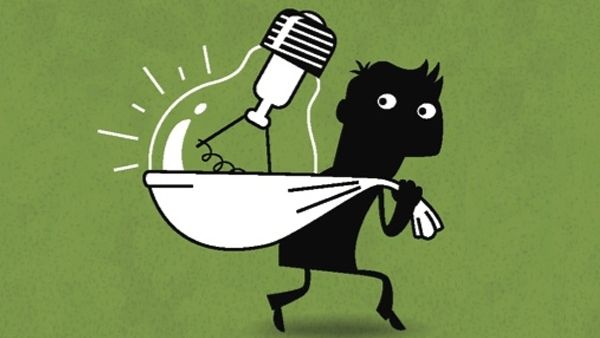
Many beginners ask themselves this question while trying to bring their ideas to life: how can you protect your rights as the author of a new project idea? According to the Civil Code of Ukraine, copyright does not extend to ideas, processes, methods of activity, or mathematical concepts as such. This list also includes theories, principles, procedures, systems, methods, and discoveries, even if they are expressed, described, explained, or illustrated in a work. This means that ideas and creative concepts that are not objectively expressed in a work are not considered objects of copyright. It is very important to understand that in such cases legal protection does not apply to the idea itself, because copyright protects only the form of expression of a work, not its content or technical solutions. Under these conditions, an idea can be easily stolen. As a rule, startup founders offer investors to sign an NDA (non-disclosure agreement). Unfortunately, at this stage, the protection of their business often ends. Of course, there is nothing wrong with such an agreement—on the contrary, it defines the mutual rights and obligations of the parties regarding the disclosure and use of the idea, responsibility for commitments, and other details. However, this agreement protects your future business only within the closed circle of “entrepreneur–partner–investor” relationships and does not protect against unfair competition outside these relationships. In conclusion, what first catches the eye (such as the name and packaging), meaning intellectual property, is the number one asset that requires protection when creating your business. Powerful ways to protect an author’s rights in this case include registering intellectual property—such as a trademark, logo, as well as patenting inventions, utility models, and industrial designs. This allows you to protect your brand, the appearance of your product (packaging, containers), and production technologies. In this way, you secure not only the exclusive right to use and profit from them but also the right to prohibit third parties from using them. Before carrying out these procedures, it is advisable to consult experts in this field or delegate the process to them. This process is not only the most correct and safest for a startup but also quite time-consuming and demanding. Registering a trademark is, first of all, a far-sighted decision for a startup business. One of the main advantages of registering intellectual property rights is protection against counterfeiting and unfair competition, as consumers are more likely to trust and choose goods and services associated with a well-known trademark. Such marks inspire trust and confidence in quality. Malicious use of your intellectual property by competitors can damage your company’s reputation, lead to the loss of current and potential customers, and result in decreased demand, sales, and slower business growth. To prevent such situations in the future and ensure timely protection of your startup today, it is crucial to register your intellectual property early. Otherwise, the time, effort, and money spent on registration later may turn out to be a small price compared to having nothing left to protect. An idea—being an innovation—always requires patent protection, registered not only in your own country by filing a patent application and obtaining a certificate of intellectual property rights, but ideally also in foreign countries to better “secure” your idea. Protection also helps prevent unfair competition, such as the legal use of similar packaging by other manufacturers to label lower-quality products. If your business is based on an idea adapted from successful foreign experience, it is important to understand that protecting it from being copied is much more difficult. There will always be someone “faster” who can implement it days or months earlier. In such cases, there may be little you can do—because, as they say, those who are late miss their chance. Thus, the conclusion is clear: at the early stages of creating a business, protecting your ideas requires bringing them to life through the registration of intellectual property. Delaying this process carries a high risk of missing the right moment. Even if your idea is not stolen, with over 7 billion people on Earth, many ambitious individuals are developing their own startup ideas. Some may nurture an idea for years without acting, while others will move forward and implement it sooner. Author: Olha Yakusha, intellectual property specialist at Prima Veritas